
Mold Testing & Inspection in Ann Arbor, MI
Not sure whether you have mold, how far it goes, or whether the cleanup worked? Independent mold inspectors serving Ann Arbor and Washtenaw County can reply with free quotes. This page explains when testing is worth paying for, what samples can and can't tell you, and why it helps to keep the tester separate from the remover.
Get a Free Quote Call (734) 888-2281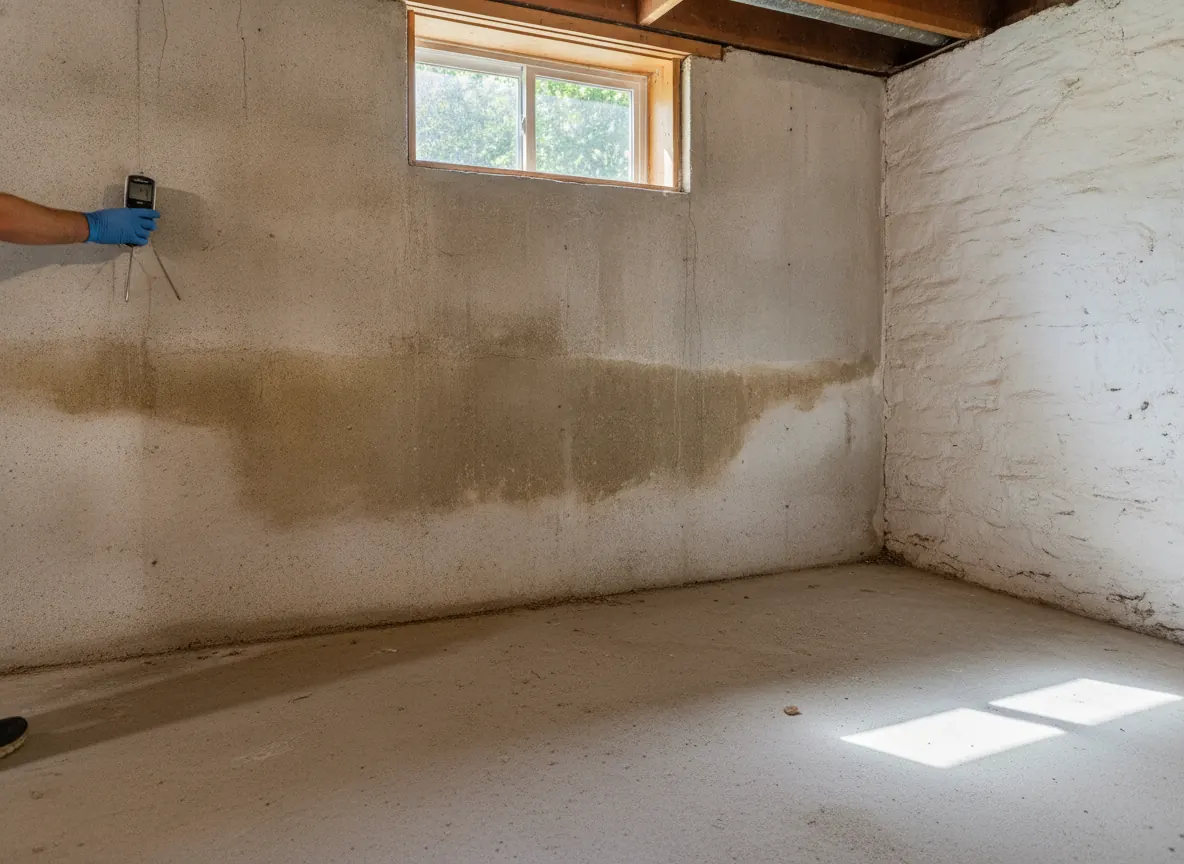
When testing helps, and when it doesn't
EPA says testing usually isn't needed when you can see mold, and Michigan's health department doesn't recommend routine testing. If you can see the mold and know where the water came from, you can usually skip the lab and go straight to mold removal quotes.
An inspection or test is most useful when:
- You smell mold but can't find it, and suspect it is inside a wall, under a finished basement floor, in the attic or in the ducts
- You need evidence in a dispute with a landlord, seller, buyer or insurer
- You are buying or selling a home and want an independent look before closing
- Remediation is finished and you want a clearance check before walls are closed
For more on that decision, see do you need mold testing?
What a mold inspection typically includes
Michigan has no state license or standard for mold inspectors, so methods vary. A careful visit often looks like this.
History and walk-through
The inspector asks about leaks, past basement water and smells, then looks at the basement, bathrooms, attic hatch and furnace area.
Moisture readings
A moisture meter checks stained or suspect drywall, trim and subfloor. Some inspectors use a thermal camera to find cool, damp spots. Moisture is often the most useful finding.
Samples, if they help
Air samples compare indoor air with an outdoor sample. Tape or swab samples show what is growing on a surface. Samples go to a lab for analysis.
Written report
You get the findings, photos, lab results if any, and the likely moisture source. A good report says what it can't tell you, too.
Ask before booking whether the price includes lab fees, how many samples are planned, and whether you get the full lab report. The process page shows where testing fits in a full job.
What test results can and can't tell you
Mold spores are always in outdoor air, so no home has zero. An air test is a snapshot of a few minutes on one day. That's why most inspectors compare indoor samples with an outdoor sample taken at the same time.
There are no federal or Michigan limits for mold in a home, so a lab report can't say a house is "safe" or "unsafe." What it can do is show that the indoor mix differs from outdoors, point to a hidden source, or show that a cleaned area now looks like the rest of the house.
Keep the tester independent
Michigan has no rule on this, but it is good practice to hire a tester who is independent of the company that will do the removal. Ann Arbor Mold Experts can connect you with both kinds of company, but they are separate businesses and you choose who does what.
Mold testing in Ann Arbor: local situations
Finished basements. Many Ann Arbor-area basements have been finished with drywall and carpet. After a leak or backup, mold can grow behind the wall where you can't see it. Moisture readings along the bottom of the walls are often more useful than an air sample. See basement mold.
After the June 2021 storm. On June 25–26, 2021, about 4.8 inches of rain fell on parts of Ann Arbor, and the city reported basement backups centered on Pittsfield Village. If a basement got wet then and was only partly opened up, an inspection can check whether hidden materials stayed damp.
Older houses. The median Ann Arbor home was built in 1971, and about 15% of homes predate 1940 (American Community Survey 2020–2024). Older homes often have more hidden cavities and past repairs, which is when a careful inspection earns its fee.
Rentals. About 54.5% of Ann Arbor's occupied homes are rented. The city's Rental Housing Services inspectors don't test for mold, but they can require visible mold to be treated. Tenants should notify the landlord in writing first. See mold in rentals and student housing.
What mold testing costs
Price depends on the size of the home, how many samples are taken and whether a written report or clearance letter is included.
| Item | Typical range | Source |
|---|---|---|
| Mold inspection / testing | $450–$800 (avg ≈ $500); inspection only $300–$600 | Fixr, Jan 2025 |
| Air test · surface (tape/swab) test | $500–$700 · $150–$200 | Fixr, Jan 2025 |
| Mold remediation, typical job | $1,500–$9,000 (avg ≈ $3,500) · $1,200–$3,750 (avg ≈ $2,300) | Fixr, Aug 2025 · This Old House, Mar 2026 |
A clearance test after remediation is usually priced separately. For full job ranges, see the mold remediation cost guide.
Questions to ask an inspector
- Do you also do mold removal? If so, would you be willing to only test on this job?
- How many samples do you plan to take, and is an outdoor comparison sample included?
- Which lab analyzes the samples, and will I get the full lab report?
- Will the written report name the likely moisture source?
- Can you send proof of liability insurance, and what training do you have?
Health: what the EPA and CDC say
The EPA and CDC describe the main health effects of indoor mold as allergic reactions, irritation of the eyes, nose, throat and skin, and asthma symptoms in people who have asthma. People with allergies, asthma, lung disease or a weakened immune system may be more sensitive. The color of the mold doesn't tell you how risky it is. If someone in the home has symptoms, talk to a doctor.
Mold inspection and testing questions
Do I need mold testing if I can see the mold?
Usually not. EPA says testing usually isn't needed when you can see mold, and Michigan's health department doesn't recommend routine testing. Visible mold should be cleaned or removed and the water source fixed, whatever the species. Testing is more useful when mold is hidden, when you need evidence, or to check the work afterward.
How much does a mold inspection cost?
Fixr's January 2025 national figures put mold inspection and testing at about $450–$800, averaging about $500, and inspection without lab samples at about $300–$600. An air test runs about $500–$700, and a tape or swab surface test about $150–$200. Ann Arbor-area quotes vary with the size of the home and the number of samples.
Should the company that tests for mold also remove it?
Michigan has no rule against it, but it is worth keeping them separate. A tester who won't be paid for the cleanup has no reason to make the problem look bigger or the result look better. Many homeowners hire one company to test and a different one to remove, especially for a clearance check after the work.
Does the City of Ann Arbor test rentals for mold?
No. The city's Rental Housing Services office says it cannot test for mold or recommend anyone to test. If inspectors can see mold, the owner or agent must treat the visible surfaces. Tenants should notify the landlord in writing first, then contact Rental Housing Services at 734-794-6264 if the problem isn't fixed.
What is a clearance test?
A clearance test is a check after remediation and before walls or floors are closed. It usually includes a visual inspection, moisture readings and one or more air or surface samples. It shows whether the area is clean and dry. Ask for it in the written scope, and consider a tester who is independent of the remediation company.
Get mold inspection quotes in Ann Arbor
Say what you are seeing or smelling, where, whether there was a leak, and whether you want testing before a cleanup or a clearance check after one.
Your request goes to independent local companies, which may pay to receive requests. Ann Arbor Mold Experts does not inspect, test or remove mold. Describe your situation any time; companies reply on their own schedules. No obligation. Prefer to talk? Call (734) 888-2281
Found mold or a musty basement? Get free quotes.
Describe it once and independent mold companies serving Ann Arbor and Washtenaw County can reply with no-obligation quotes.