
Does Michigan Require a Mold Remediation License? What to Check Instead
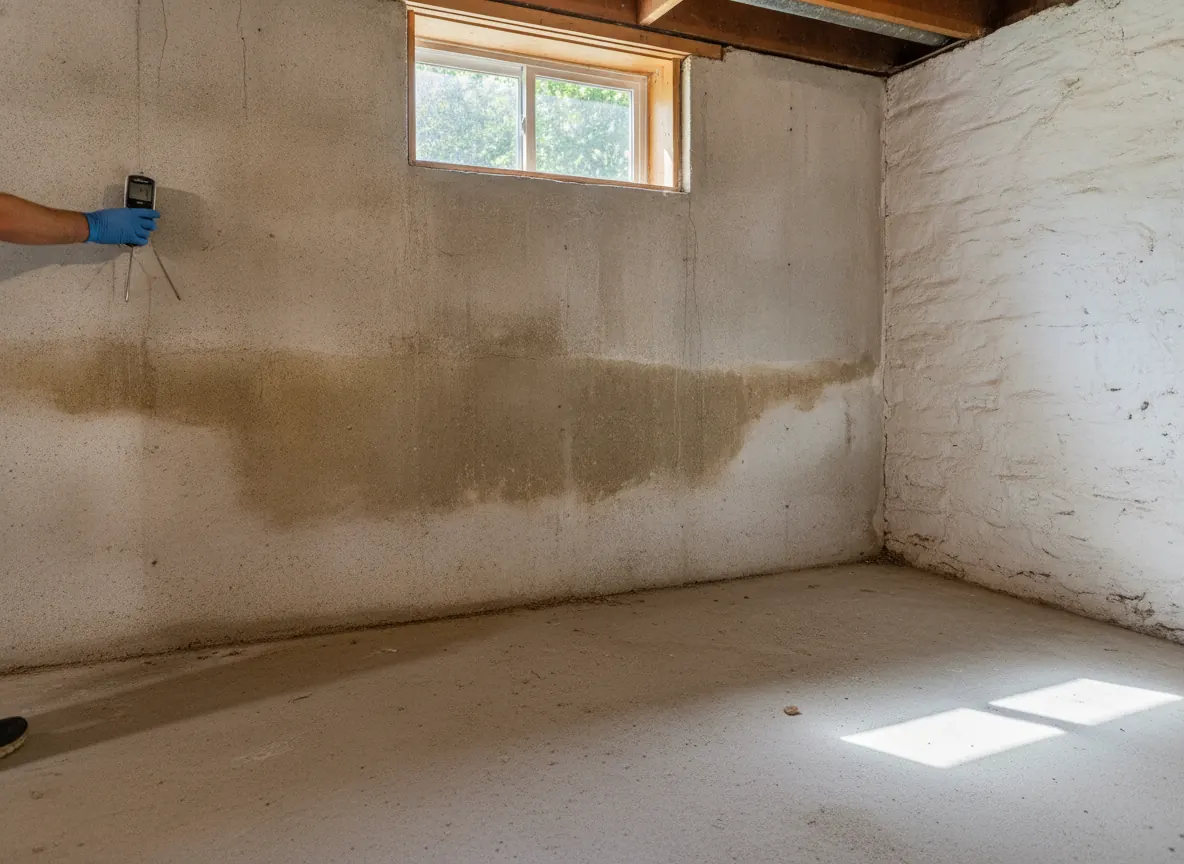
If you found mold in your Ann Arbor, MI home and you are comparing companies, you may go looking for a state mold license to check. You won't find one. That surprises a lot of people, and it changes what you should ask before you hire anyone.
This post explains what Michigan does and doesn't regulate, where a state contractor license does come in, and a short list of things to verify before you sign.
The short version. Michigan doesn't license mold remediation companies, and the state health department doesn't certify mold remediators or testers. Repair and rebuild work of $600 or more, such as replacing drywall or insulation, generally needs a Residential Builder or Maintenance & Alteration license from LARA (MCL 339.2401–2404). Ask for the license number and verify it with LARA.
Does Michigan license mold remediation companies?
No. There is no Michigan statute or rule that licenses mold inspectors, mold assessors or mold remediators. Some states have one. Michigan does not, so any company can call itself a mold company here.
That has two practical effects. First, a phrase like "state-certified mold remediator" does not describe a real Michigan credential. Treat it as a reason to ask more questions. Second, you have to judge a company on other things: its contractor license for the rebuild part of the job, its written scope, its insurance and how it plans to keep mold from spreading while it works.
Michigan's Consumer Protection Act (MCL 445.903) bans misleading claims about the "sponsorship, approval, or certification" of a service. If a company tells you it holds a state mold license, ask to see it. If you think a claim was false, you can file a complaint with the Michigan Attorney General.
When a LARA builder or M&A license applies
Michigan's Occupational Code covers people who are paid to repair, alter, improve or demolish part of a home. That work needs one of two licenses from LARA, the Department of Licensing and Regulatory Affairs:
- Residential Builder: for building, replacing, repairing or altering a residential structure (MCL 339.2401(a)).
- Maintenance & Alteration (M&A) contractor: for repair and alteration work in specific trades. The trades listed in MCL 339.2404 include carpentry, concrete, waterproofing a basement, excavation, insulation work, masonry, roofing, siding and gutters, and tile.
Mold remediation is not on that trade list. But most mold jobs don't stop at cleaning. Wet drywall gets cut out and replaced. Insulation comes out and goes back in. A basement may need waterproofing. That repair and rebuild work is the part that generally needs a LARA license.
The $600 line
The law exempts a single project where the total contract price for labor and materials is less than $600 (MCL 339.2403). The exemption doesn't apply if the small job is part of a larger operation, or if a contractor splits one job into several contracts to stay under the line. On most mold jobs that include any rebuild, assume the $600 line will be crossed.
Who doesn't need the license
The same section lists exemptions. In plain terms:
- Owners working on the home they live in.
- Owners of rental property doing maintenance and alteration on their own rentals.
- People working only under contract with a licensed builder or M&A contractor.
- Licensed electrical, plumbing and mechanical contractors working within their own trade.
| Part of the job | License picture in Michigan | What to ask |
|---|---|---|
| Inspection or testing | No state mold license or certification | What training the tester has, and whether the tester is independent of the remediator |
| Mold cleanup and removal | No state mold license | A written scope: containment, removal, cleaning, drying, and how the work will be checked |
| Rebuild: drywall, insulation, framing, basement waterproofing ($600 or more) | Generally needs a LARA Residential Builder or M&A license | The license number, the name it is issued to, and which trades it covers |
| Plumbing, electrical or mechanical repairs | Those trades have their own licenses | Who does that work and which license covers it |
How to check a Michigan contractor license
Ask for the number in writing
Get the license number and the exact name it is issued to. It should match the name on your contract.
Look it up with LARA
Use LARA's online license search. Confirm the license is active and is the right type: Residential Builder or Maintenance & Alteration.
Check the trades
An M&A license names the trades the holder qualified in. A company may do other trades only when that work is "incidental and supplemental" to its licensed trade (MCL 339.2404).
Ask about subcontractors
If a mold company plans to hand the rebuild to someone else, ask who, and check that license too.
Mold cleanup itself usually isn't permitted work, but rebuilding (drywall, insulation, framing, waterproofing) often is. The contractor should confirm with your city or township and pull any permit needed.
Training and private credentials
Some mold companies hold certificates from private industry groups. These are not state licenses. They can still tell you something about how a crew was trained. Ask what training the people doing your job have, and ask them to explain how they will contain the area and protect the rest of the house. A clear answer is worth more than a logo.
Do you need mold testing before you hire?
Often, no. EPA says testing usually isn't needed when you can see mold, and Michigan's health department doesn't recommend routine testing. Testing can help when you smell mold but can't find it, when you and a landlord or buyer disagree, or when you want a clearance check after the work.
If you do test, consider hiring a tester who is independent of the company doing the removal. Michigan has no rule requiring that. It is simply good practice, because the person measuring the problem then has no stake in how big the job is. The mold inspection and testing page covers when a test is worth paying for.
Contracts signed at your home: the 3-day cancel rule
You generally have 3 business days to cancel a contract signed at your home (MCL 445.111–.113). The seller has to give you a written notice of cancellation. If you cancel, the refund is due within 10 business days.
There is an emergency exception. You can waive the cancel right with a separate handwritten, signed statement saying the work can't wait. Be careful about signing that waiver under pressure. A slow basement leak or a patch of mold behind a dresser is rarely an emergency that can't wait three business days.
Questions to ask any mold company before you sign
- Your LARA license number and type, if the job includes rebuild work of $600 or more
- A written scope that lists what will be removed, cleaned, dried and replaced
- Proof of insurance
- How the work area will be contained, and how the rest of the house will be protected
- What will be done about the moisture source, and who will do it
- How the work will be checked at the end, and whether an independent tester is an option
Prices vary with the size of the area and how much has to come out. The Ann Arbor mold remediation cost guide lists published national ranges so you can see whether a quote is in the usual band. For what a typical job looks like, see mold removal in Ann Arbor.
Red flags
Be careful with a "state-certified" or "licensed mold remediator" claim, a contractor license number that belongs to a different business name, pressure to sign an emergency waiver, a request for full payment upfront, and a scope that doesn't mention fixing the water problem. For areas under about 10 square feet, EPA says homeowners can often clean it themselves, so a very small job may not need a company at all.
About this site. Ann Arbor Mold Experts is a free quote service, not a mold company. You describe the problem once, and independent local companies, which may pay to receive requests, can reply with quotes. Describe your situation any time; companies reply on their own schedules.
Frequently asked questions
Do you need a license to do mold remediation in Michigan?
Not a mold license. Michigan doesn't license mold remediation companies, and the state health department doesn't certify mold remediators or testers. Repair and rebuild work of $600 or more, such as replacing drywall or insulation, generally needs a Residential Builder or Maintenance & Alteration license from LARA.
How do I check a contractor license in Michigan?
Ask for the license number and the exact name it is issued to, then look it up with LARA's online license search. Confirm it is active, that it is a Residential Builder or Maintenance & Alteration license, and that the name matches your contract.
Can a company call itself a certified mold remediator in Michigan?
There is no Michigan state certification for mold remediators. Some companies hold private training certificates, which are not state credentials. Michigan's Consumer Protection Act bans misleading claims about certification, so ask what any claimed credential is and who issued it.
Can I cancel a mold remediation contract in Michigan?
You generally have 3 business days to cancel a contract signed at your home (MCL 445.111–.113). The seller must give you a written cancellation notice. Be careful about signing an emergency waiver of that right under pressure.