
Why Michigan Basements Get Moldy, and How to Stop It
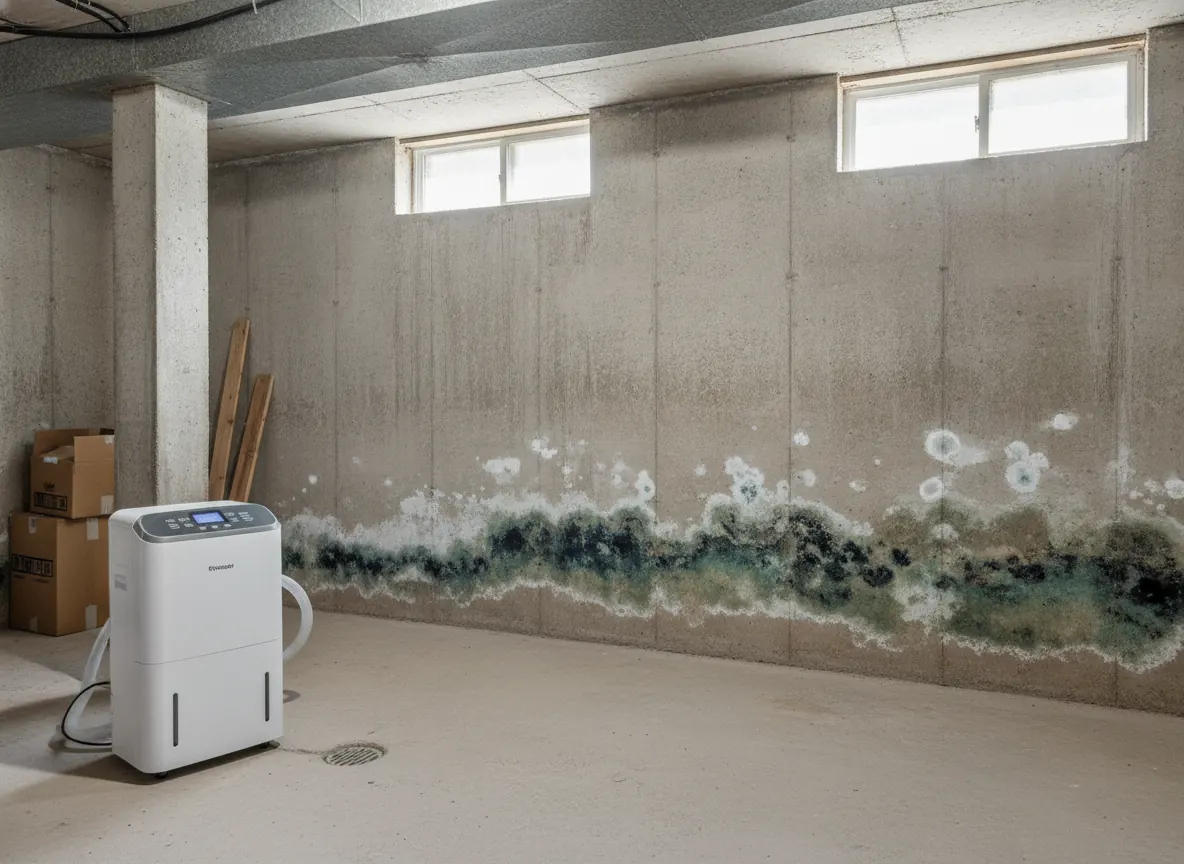
A musty basement is one of the most common mold complaints in Ann Arbor, MI and the rest of Washtenaw County. It tends to get worse in late summer, flare again with spring snowmelt, and show up after a big storm. The good news is that basement mold almost always has a moisture cause you can find and fix. This guide covers why it happens here, how to tell mold from mineral deposits, what to clean yourself, and what to change so it doesn't come back.
The short answer. Basement mold comes from water: humid summer air meeting cool walls, water coming through or under the foundation, or a backup. Dry anything wet within 24–48 hours, keep humidity below 60% (EPA, ideally 30–50%), and fix the water source before or during any cleanup.
Why Michigan basements get musty every summer
Southeast Michigan summers are humid. NOAA's 1991–2020 normals for Detroit Metro airport, the nearest station with hourly normals, put the average dew point at about 61°F in July and August. Basement walls and floors are often cooler than that, because they sit against the ground.
When humid air touches a surface cooler than its dew point, water condenses on it. That can mean damp walls, sweating cold-water pipes, and carpet or boxes that never quite dry. Opening basement windows on a muggy day can make it worse, because you bring in more humid air.
Snowmelt, rain and the foundation
Ann Arbor averages about 38.3 inches of precipitation and 61 inches of snow a year (NOAA 1991–2020 normals, University of Michigan station). Rain falls fairly evenly across the year, and snowmelt plus spring rain can load the soil around a foundation. Water in that soil can seep through cracks, through the joint where the wall meets the floor, or through porous block or stone in older houses.
Where the downspouts drop water and how the ground slopes near the house make a big difference. Water that pools against the foundation has only one place to go.
Storms and basement backups
On June 25–26, 2021, about 4.8 inches of rain fell on parts of Ann Arbor, roughly a 100-year storm according to the city's analysis. There were basement backups across the city, centered on the Pittsfield Village neighborhood. The city found that connected footing drains sent a large amount of water into the sanitary sewer, which then backed up into basements. FEMA's disaster declaration DR-4607 covered Washtenaw County.
A backup or a failed sump pump puts a lot of water into a basement at once. If carpet, drywall or stored items stay wet for more than a day or two, mold can start. The mold after leaks and basement flooding page covers what to do in the first days.
Mold or efflorescence?
Many people see a white, fuzzy or crusty layer on a basement wall and assume it's mold. Often it's efflorescence: mineral salts left behind when water moves through concrete or masonry and evaporates. It isn't mold, but it is a sign that water is coming through the wall.
| Efflorescence | Mold | |
|---|---|---|
| Color | White or gray | Often green, gray, black or white |
| Texture | Crusty or powdery, like salt | Fuzzy, slimy or spotty |
| Where | Bare concrete, block, brick or stone | Drywall, wood, paper, carpet, boxes, and dust on walls |
| Simple test | Usually dissolves in water and crumbles when rubbed | Smears; often smells musty |
| What it means | Water is moving through the wall | Something has stayed damp long enough to grow mold |
You can have both at once, as in the photo above. Either one points back to the same fix: control the water.
How to get rid of mold in a basement
Size matters. For areas under about 10 square feet, EPA says homeowners can often clean it themselves. For anything larger, for mold inside finished walls, or after sewage backup, a company is usually the better choice.
Find and stop the water
Look for the source first: condensation, a leak, seepage at the wall base, a downspout, a sump problem. Cleaning without fixing it means the mold comes back.
Dry the space
Run a dehumidifier and fans. Dry wet materials within 24–48 hours if you can.
Remove what can't be cleaned
Moldy carpet, ceiling tiles, cardboard and wet drywall usually have to go.
Clean hard surfaces
Scrub mold off hard surfaces with detergent and water, and let them dry completely. Wear gloves, eye protection and a mask rated for particles.
Watch for it to come back
If it returns in the same place, the moisture problem isn't solved yet.
Finished basements
A finished basement hides problems. Drywall, carpet and pad, framing and insulation against a foundation wall can stay damp out of sight. Signs include a musty smell, baseboards that stain or swell, and carpet that feels damp along the outside wall.
When a company opens up a finished wall, it typically sets up containment, cuts out drywall above the wet line, removes wet insulation, dries the framing and cleans what can be saved. Rebuilding the wall is repair work, and in Michigan repair and rebuild work of $600 or more generally needs a LARA Residential Builder or Maintenance & Alteration license. Basement waterproofing is one of the trades named in the law. The basement mold page goes into what a typical job looks like.
Prevention that works
The City of Ann Arbor's advice after the 2021 storm is a good starting list for basement water:
- Footing drain disconnection. The city runs a footing drain disconnection program (FDD) so groundwater from around your foundation no longer goes into the sanitary sewer.
- A backwater or check valve on the sanitary sewer lead, to help keep sewage from backing into the basement.
- Downspouts extended away from the house.
- Grading that slopes soil away from the foundation.
Then manage the air:
- Keep indoor humidity below 60%, ideally 30–50% (EPA). A humidity meter costs little and tells you when to act.
- Run a dehumidifier through the humid months and empty it or drain it to a floor drain.
- Keep windows closed on muggy days.
- Store things in plastic bins, off the floor and away from outside walls.
- Test the sump pump each spring, and consider a battery backup if your basement depends on it.
What basement mold costs
Published national estimates put basement mold remediation at about $1,500–$4,000 (Fixr, Aug 2025) or $500–$3,000 (This Old House with Angi data, Mar 2026). Those are not quotes, and Ann Arbor-area quotes vary with the size of the area, whether walls are finished, and how much has to be rebuilt. The Ann Arbor mold remediation cost guide has the full table and a calculator.
Will insurance pay?
Maybe, and it depends on the water. Many Michigan homeowners policies cover mold only when it comes from a covered water loss, often with a cap. Sewer backup and sump pump failure usually need a separate endorsement, according to the state insurance department. Slow seepage and humidity are usually not covered. Check your declarations page and call your insurer before you sign a contract.
Is basement mold a health concern?
EPA and CDC say mold can cause stuffy nose, wheezing, and red or itchy eyes or skin in sensitive people. People with allergies, asthma or weakened immune systems may react more strongly. If someone has symptoms, talk with a doctor.
About this site. Ann Arbor Mold Experts is a free quote service, not a mold company. You describe the problem once, and independent local companies, which may pay to receive requests, can reply with quotes. Describe your situation any time; companies reply on their own schedules.
Frequently asked questions
Why does my Michigan basement get moldy every summer?
Humid summer air meets cool basement walls and floors. Summer dew points average about 61°F at Detroit Metro airport (NOAA 1991–2020), and basement surfaces are often cooler, so moisture condenses. Run a dehumidifier, keep windows closed on muggy days and keep humidity below 60%.
Is the white stuff on my basement wall mold?
Often it's efflorescence, mineral salt left when water moves through concrete or masonry. It's crusty, usually dissolves in water and crumbles when rubbed. Mold is fuzzy or slimy and grows on materials like drywall, wood and cardboard. Both mean water is getting in.
Can I remove basement mold myself?
For areas under about 10 square feet, EPA says homeowners can often clean it themselves. Fix the water source first, dry the area, throw out moldy porous items and scrub hard surfaces. For larger areas, mold inside finished walls or sewage backups, get quotes from a company.
How do I stop water getting into my Ann Arbor basement?
The City of Ann Arbor recommends footing drain disconnection, a check valve on the sanitary sewer lead, extending downspouts away from the house and grading soil away from the foundation. Basement waterproofing work over $600 generally needs a LARA-licensed contractor.