
Basement Flooding and Mold: A Checklist for Ann Arbor Homes
Water in the basement is one of the most common starting points for mold in Ann Arbor, MI. What you do in the first two days matters most. EPA says to dry water-damaged areas and items within 24 to 48 hours to prevent mold growth. This checklist covers the first hours, the first two days, the weeks after, and the steps the City of Ann Arbor recommends to lower the chance of another backup.
What happened in June 2021
On the evening of June 25, 2021 and into the early morning of June 26, a large storm brought numerous reports of flooding and basement backups in Washtenaw and Wayne counties. The City of Ann Arbor's storm analysis found that the study area received about 4.8 inches of rain, a storm with a 1% chance of occurring in any given year (a 100-year storm). The Pittsfield Village neighborhood and surrounding streets were the most affected in the city, though backups were reported throughout Ann Arbor. The city found that connected footing drains appear to have sent a large amount of flow into the sanitary sewer, contributing to the backups. FEMA's disaster declaration DR-4607 covered Washtenaw County for those storms.
Pittsfield Village is an Ann Arbor neighborhood, not Pittsfield Township. Storms like that are rare, but heavy rain is not: NOAA's 1991–2020 normals for the University of Michigan station show about 38 inches of precipitation a year, with June the wettest month at about 3.9 inches.
First few hours: safety and records
- Stay safe. Do not walk into standing water if outlets, cords or appliances may be underwater. Have the power shut off by the utility or an electrician if needed.
- Treat sewage as contaminated. If water came up through a floor drain or toilet, wear gloves and boots, keep children and pets away, and wash up well.
- Stop the source if you can: shut off a leaking pipe, check whether the sump pump is running, and stop using sinks and toilets during a sewer backup.
- Photograph everything before you move it: the water line on walls, the source, and damaged belongings.
- Call your insurer or agent. Ask what they need before you throw anything away.
- Renters: notify your landlord right away, and follow up in writing.
First 24 to 48 hours: get it dry
- Pump or vacuum out standing water.
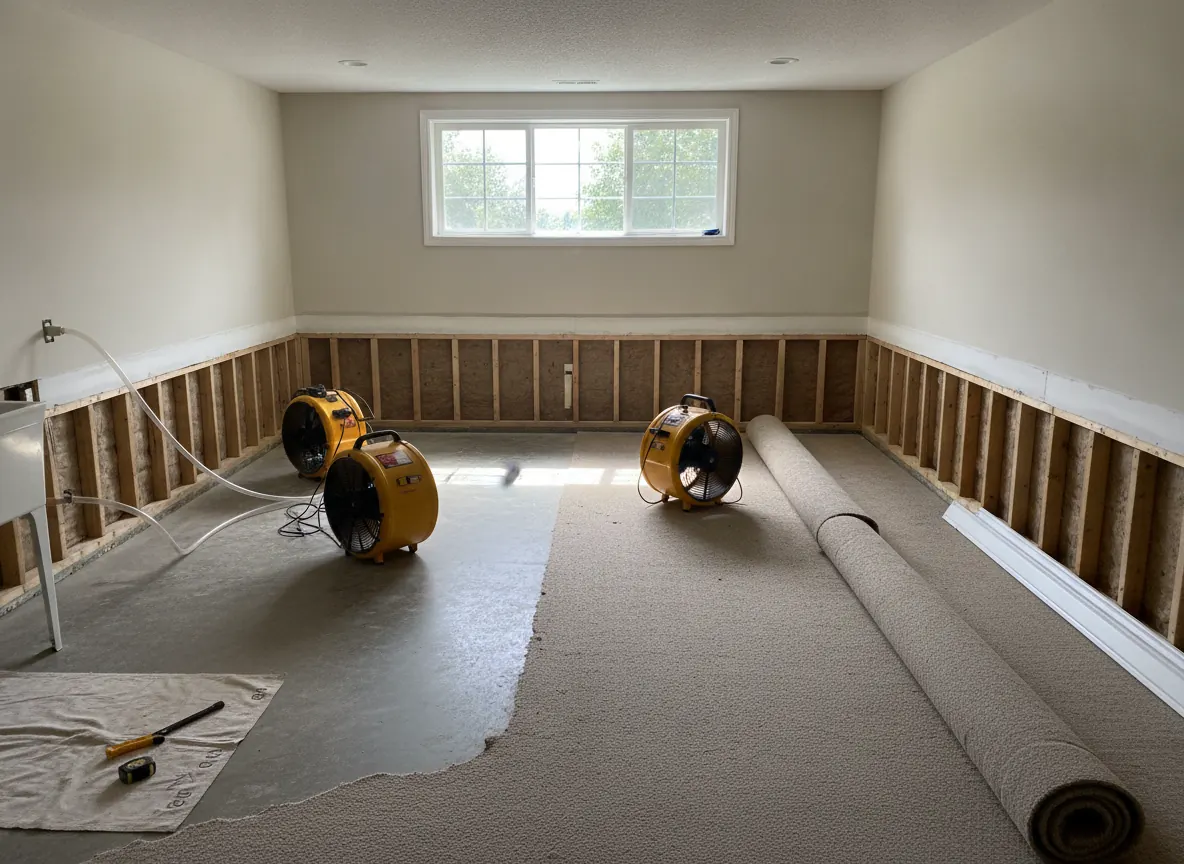
- Pull up wet carpet and pad and move them out to dry or for disposal.
- Move wet boxes, furniture and stored items out of the basement.
- Run fans and dehumidifiers continuously, with windows closed if outdoor air is humid.
- Open up wet drywall if it has wicked water, so the cavity can dry.
- Track indoor humidity with a cheap hygrometer. EPA recommends keeping it below 60%, ideally 30–50%.
| Material | Clean water, dried fast | After sewage or long soaking |
|---|---|---|
| Carpet pad | Usually replaced | Replaced |
| Carpet | Sometimes saved if dried quickly | Usually replaced |
| Drywall | Often cut above the water line | Cut above the water line |
| Wall insulation | Usually removed if wet | Removed |
| Concrete floor and walls | Cleaned and dried | Cleaned, disinfected and dried |
| Wood framing | Dried and checked | Cleaned, dried and checked |
| Upholstered furniture, boxes | Hard to save unless dried fast | Usually discarded |
The 48-hour rule. If wet drywall, insulation or carpet can't be dried within about 48 hours, plan on removing it. That is the window EPA gives for preventing mold growth, and it is the step most often missed in a finished basement.
When to call a professional
- Sewage came into the basement.
- A finished basement has wet drywall, insulation or carpet across a large area.
- You can't get the space dry within two days.
- Mold is already visible on more than about 10 square feet. For smaller areas, EPA says homeowners can often clean it themselves.
- A musty smell shows up weeks later, or stains appear at the bottom of walls.
The water damage and mold page explains what local companies typically do after a backup, and the basement mold page covers longer-term moisture problems.
Michigan license check. Michigan doesn't license mold remediation companies, and the state health department doesn't certify mold remediators or testers. Repair and rebuild work of $600 or more, such as replacing drywall or insulation, generally needs a Residential Builder or Maintenance & Alteration license from LARA (MCL 339.2401–2404). Ask for the license number and verify it with LARA.
The weeks after: watch for mold
Mold can appear days or weeks after a flood, behind baseboards, on the back of drywall, under carpet that stayed down, or on stored items. Check the lower walls and corners every few days for a month. Keep the dehumidifier running. A smell that doesn't fade usually means something is still damp.
How to lower the risk of the next backup
After the 2021 storm, the City of Ann Arbor's recommendations for homeowners included:
- Footing drain disconnection. The city's Developer Offset Mitigation (DOM) program disconnects footing drains from the sanitary sewer, which the city found contributed to backups.
- A check valve (backwater valve) on the sanitary sewer lead, to keep sewage from flowing back into the basement.
- Extended downspouts that carry roof water well away from the foundation.
- Grading that slopes soil away from the house.
Test your sump pump each spring, keep the pit clear, and think about a backup power option if outages are common on your street. Basement waterproofing is a Michigan Maintenance & Alteration trade, so check the LARA license of anyone you hire for it.
Insurance and costs
Sewer backup and sump pump failure usually need a separate endorsement on a homeowners policy, and surface flooding usually needs flood insurance. Mold is often covered only after a covered water loss, often with a cap. Never assume coverage; read the guide to mold and insurance in Michigan and call your insurer.
Published national estimates for basement mold remediation run about $1,500 to $4,000 (Fixr, Aug 2025) and $500 to $3,000 (This Old House with Angi data, Mar 2026). Rebuilding a finished basement adds to that. See the mold remediation cost guide.
Renters in Ann Arbor: tell your landlord in writing, and if repairs stall, contact Rental Housing Services at 734-794-6264. See the rental mold page. This is not legal advice.
Ann Arbor Mold Experts is a free quote service in Ann Arbor, MI, not a mold company. It does not inspect, test or remove mold. Describe your situation any time; independent local companies reply on their own schedules. Some companies pay to receive requests, and none of them is affiliated with this site. Request free quotes or call (734) 888-2281.
Frequently asked questions
How soon does mold grow after a basement floods?
Mold can start growing within a day or two on wet materials. EPA says to dry water-damaged areas and items within 24 to 48 hours to prevent mold growth. Drywall, insulation and carpet that can't be dried in that window are usually removed.
Do I need to replace drywall after basement flooding?
Often, yes, if it wicked water or stayed wet. Drywall is commonly cut a foot or more above the water line so the wall cavity can dry and wet insulation can come out. After a sewage backup, affected drywall is usually removed. Ask your insurer before discarding anything.
What caused basement backups in Ann Arbor in June 2021?
About 4.8 inches of rain fell on June 25 and 26, 2021, roughly a 100-year storm, according to the City of Ann Arbor. The city found that connected footing drains sent a large amount of flow into the sanitary sewer, contributing to backups. Pittsfield Village was the most affected neighborhood.
How can I prevent another basement backup?
The City of Ann Arbor recommends disconnecting footing drains through its DOM program, installing a check valve on the sanitary sewer lead, extending downspouts and grading soil away from the house. Keeping indoor humidity below 60 percent and testing your sump pump also help limit mold.